Cowboy Boots vs Western Boots
Last updated 1 November 2026
Boot styles
Cowboy Boots vs Western Boots
What is the difference between cowboy boots and Western boots? How the names are used, plus the differences between classic, roper and ankle styles.
- Tracked UK delivery
- 30-day returns
- Try on in London
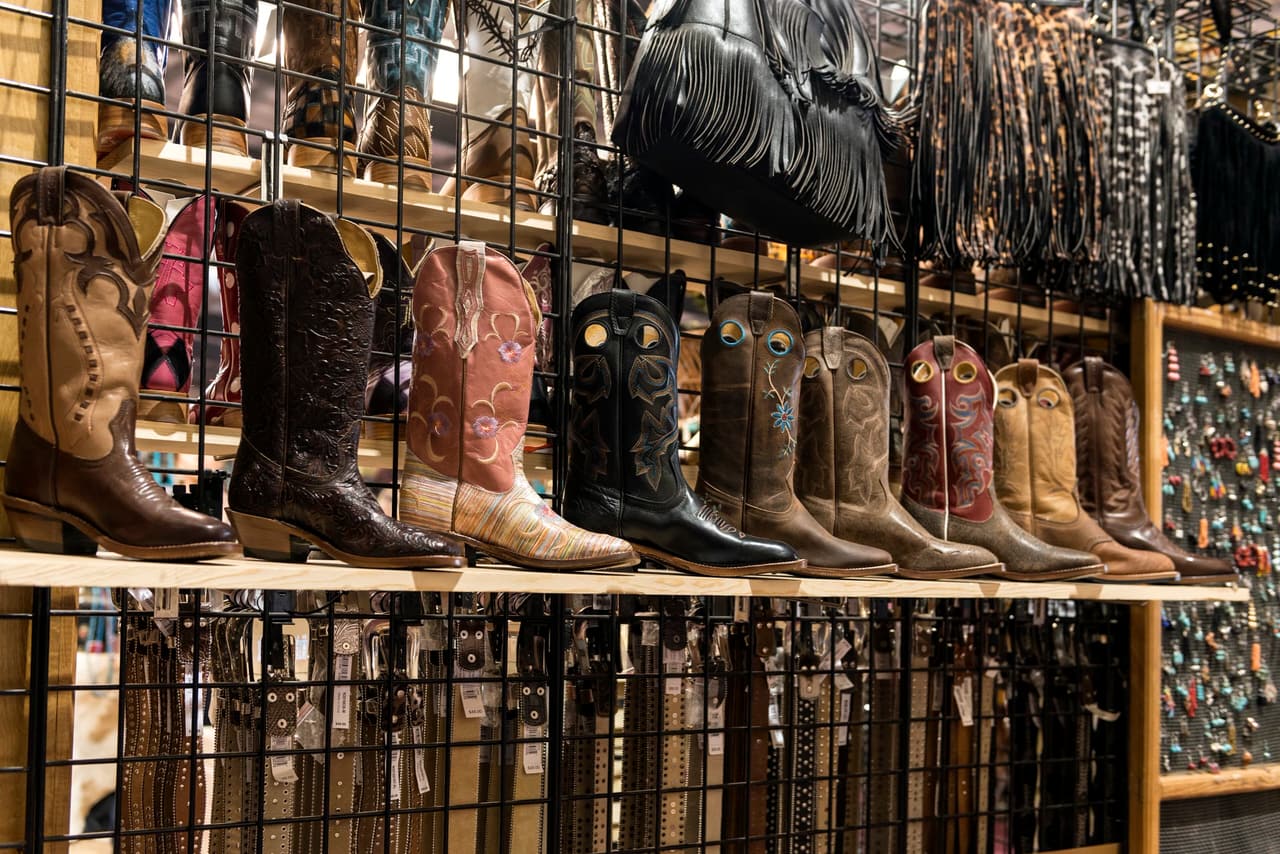
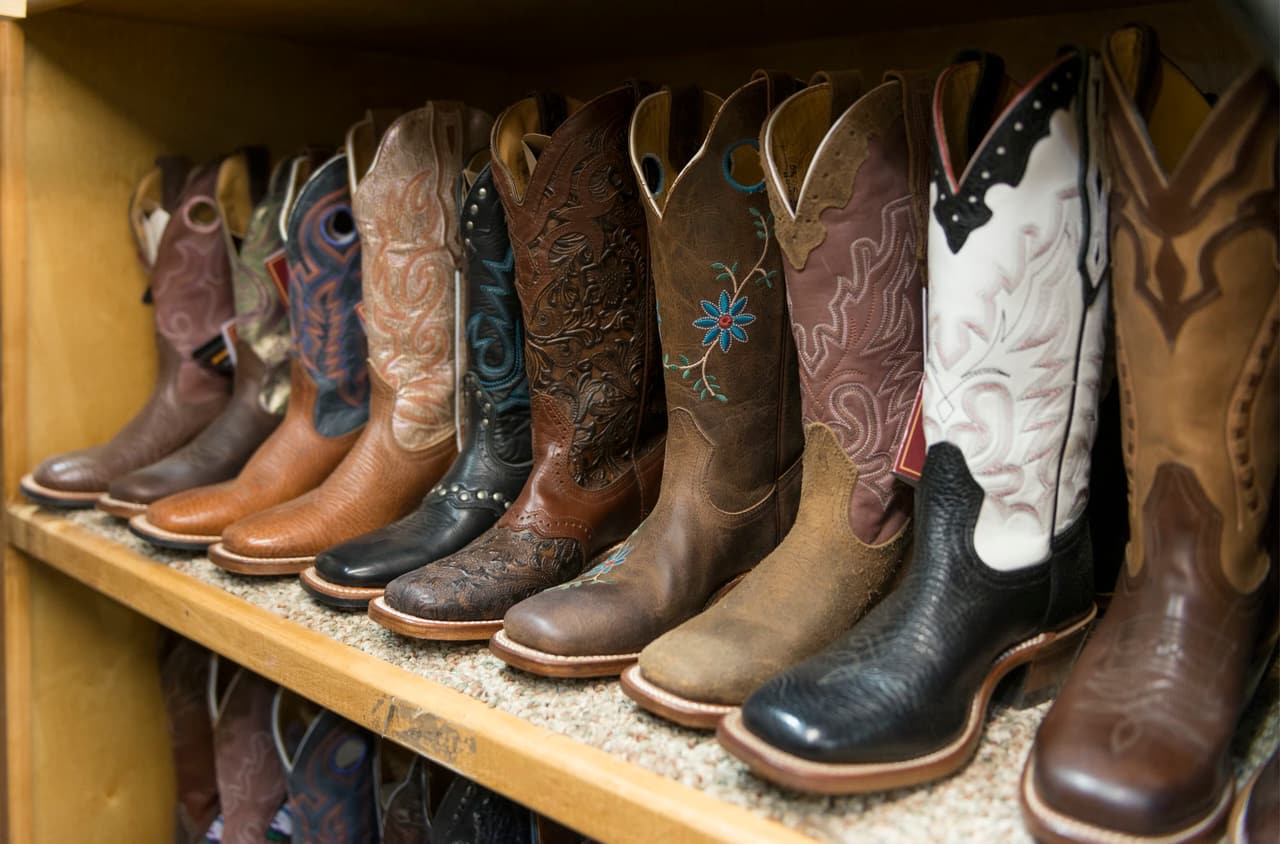
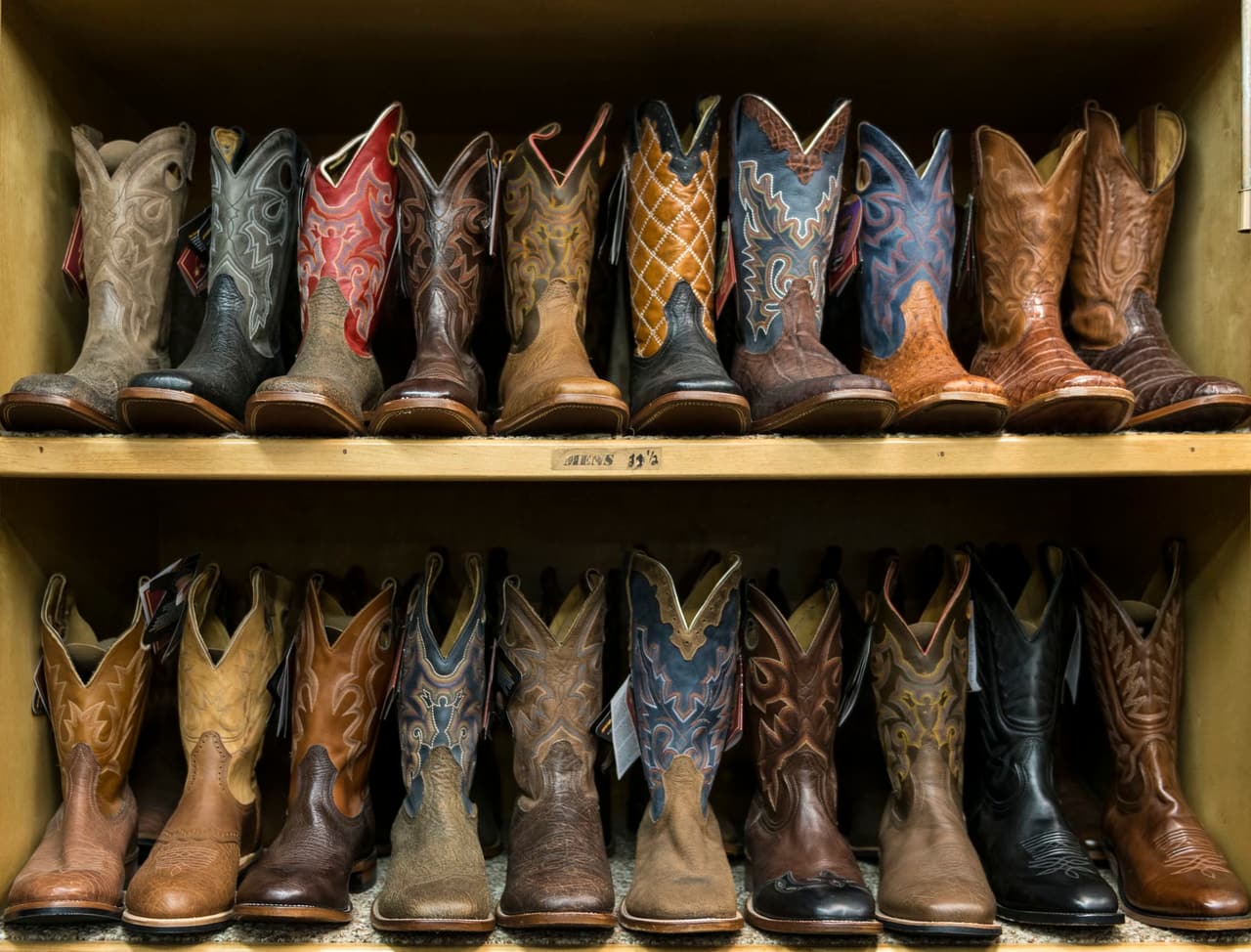
Every cowboy boot is a Western boot, but not every Western boot is a cowboy boot. “Cowboy boot” usually means the classic style: a tall shaft, a pull-on fit and a riding heel. “Western boot” is the wider family, which also includes ropers, ankle boots and fashion styles that borrow the look. In everyday shopping, people often use the two names for the same thing.
What makes a boot a cowboy boot?
A traditional cowboy boot has a few features that came from working on horseback.
- A tall shaft, usually reaching to the mid-calf or higher, which protects the leg.
- No laces, so it pulls on using the loops or tabs at the top, known as pull straps.
- An angled riding heel, often called a Cuban heel, which helps stop the foot sliding through a stirrup.
- A narrower toe, which makes it easier to get into a stirrup.
- Decorative stitching on the shaft, which also helps the leather keep its shape.
What other styles count as Western boots?
| Style | What sets it apart | Best for |
|---|---|---|
| Classic cowboy | Tall shaft, riding heel, decorative stitching | The traditional look, and riding |
| Roper | Shorter shaft, low flat heel, usually a round toe | Everyday wear and walking |
| Ankle (shortie) | Western details on an ankle-height shaft | Wearing with slim jeans, skirts and dresses |
| Work | Built for durability, and may have a sturdier sole | Physical work and outdoor use. Check the product details for any safety features |
| Fashion and embroidered | Bold colours, patterns or decoration | Standing out, with a focus on looks |
Are Western boots comfortable for everyday wear?
Yes, once they’ve settled in, as long as the fit is right. For long days of walking, the shorter, flatter styles are the most forgiving, and that’s why ropers are so popular for everyday wear. A taller heel tips your weight forward, which takes a little getting used to on hard pavements. Our boot fit guide explains what to check.
What’s the difference between a roper and a cowboy boot?
Mainly the height and the heel. A roper’s shaft is shorter and its heel is lower and flatter. The name comes from calf roping, where riders need to get off a horse and run quickly, and a low heel makes that easier. A classic cowboy boot’s higher, angled heel is better suited to the stirrup than to running.
Can you ride in any Western boot?
Not all of them are built for it. Traditional riding styles have a defined heel and a smooth sole that slips easily out of a stirrup, which matters for safety. A heavy rubber lug sole can catch, and a flat fashion boot won’t stop your foot sliding forward. If you’re buying boots for riding, ask us about a particular pair, and follow your riding school’s advice as well.
What are cowboy boots made from?
Most are leather, in smooth, textured or suede finishes. Soles are generally leather or rubber: leather is the traditional choice and slides easily, whereas rubber grips better in wet weather. Each product page lists the details we have for that pair, and you can read how to look after leather in our boot care guide.
What heel heights do Western boots come in?
Heels range from low, flat roper heels to tall, sharply angled riding heels. A low heel keeps your weight over your whole foot, which is easier for walking, driving and standing. A taller riding heel moves your weight forward and gives the classic Western stance, although it takes more getting used to. If a boot’s heel height is known, it’s listed under the specifications on the product page.
Why do cowboy boots have stitching on the shaft?
Rows of stitching help stiffen the leather, so the shaft stands up rather than collapsing around your ankle. Over time, the stitching also became a way of showing off, and it’s now one of the things that gives each style its character. Plain stitching looks understated, while colourful patterns make the boot the focus of your outfit. If you like the detail, try wearing slim jeans tucked in so it can be seen. Our guide to how to wear cowboy boots has more ideas.
How do Western boots differ from biker or work boots?
Biker boots usually have a chunkier, more practical build, sometimes with straps or buckles, and a sturdier heel. Traditional work boots tend to lace up, with thick treaded soles. A Western boot is defined by its pull-on shaft, its heel and its decoration. Some boots combine these ideas, so go by how a pair is described rather than by its name alone. We also stock a range of biker and leather boots if that’s closer to what you want.
Which should I buy?
It depends on what you’ll use them for.
- For the classic look, or for riding: a traditional cowboy boot, as found in our cowboy boots range.
- For everyday comfort: a roper or a lower-heeled style.
- For dresses and skirts, or a lighter feel: an ankle boot.
- To stand out: a fashion or embroidered pair.
Browse the wider range of Western boots, compare toe shapes, or try a few styles in our London store.
Here to help
Questions about fit, sizing or an order?
We’re happy to help by phone, by email or in person at our London store.
The Cowboy Boot Store, 27 Mortimer Street, London W1T 3BL
Phone +44 7476 604596 · Email sales@thecowboybootstore.com